
Article Contents:
Why do we have so much inventory and still miss deliveries?
High inventories, but poor delivery:
This is something I have seen in many SMEs.
The company may be carrying inventory equivalent to two or even three months of sales. A significant amount of money is blocked in raw materials, work in progress, and finished goods.
Yet, the same company struggles to meet customer delivery schedules.
This creates an obvious question for the founder:
“If we have so much inventory, why are we still unable to deliver what the customer needs on time?”
I saw this very clearly in one of the brush manufacturing companies I worked with.
When we started working with them, the company was carrying inventory equivalent to nearly two months of sales. Despite this, their delivery schedule actualisation was only around 60%.
The issue was not simply that they had too little or too much inventory.
They did not always have the right inventory, in the right quantity, at the right time.
We worked on their inventory management practices, as well as the planning and execution issues contributing to the problem.
Over time, inventory came down from nearly two months of sales to around 15 days, while delivery schedule actualisation improved from around 60% to 95%.
This experience reinforced something I have observed in many businesses:
High inventory does not necessarily ensure better delivery. High inventory and poor delivery can exist together.
So, when I see a business carrying high inventory, I would not start by asking:
“How can we reduce inventory?”
I would first ask:
“What is creating so much inventory, and why is that inventory not helping us deliver better?”
That is where meaningful inventory management begins.
Why can high inventory and poor delivery exist together?
When founders see delivery problems, one natural response is to build more inventory.
Keep some additional raw material. Produce a little more. Maintain more finished goods. The thinking is understandable:
“If we have enough stock, we should be able to meet customer requirements faster.”
But the total value of inventory does not tell us whether we have what the business actually needs.
A company may have large quantities of some raw materials while frequently running short of a few critical items.
There may be plenty of work in progress on the shop floor, but much of it may be waiting before a bottleneck operation.
Finished goods may be available, but not necessarily for the products customers currently need.
There may also be slow-moving or non-moving materials contributing significantly to the total inventory value.
So, the issue is not only how much inventory we have.
It is whether we have the right inventory, in the right quantity, at the right place and at the right time.
This is where I have seen many inventory reduction efforts go wrong.
Management looks at the total inventory value and sets a target:
“Let us reduce inventory by 20%.”
Purchasing reduces buying. Production is asked to control WIP. Stores is asked to bring down stock.
The inventory number may come down temporarily. But unless we understand why the inventory accumulated in the first place, shortages can reappear and delivery performance can suffer.
In my experience, high inventory is often a symptom of problems elsewhere in the business rather than an isolated inventory problem.
The causes may be in planning, purchasing, manufacturing, engineering, supplier performance, customer schedules or internal systems.
That is why sustainable inventory reduction should start by understanding what is creating the inventory, rather than simply trying to reduce the inventory number.
How does high inventory affect cash flow and profitable growth?
For a founder, inventory is not just material lying in the factory.
It is money already invested in the business that is yet to come back as cash from the customer.
This is why inventory has a direct impact on working capital and cash flow.
Let us take a simple example.
Assume a company has annual sales of ₹12 Cr.
The question is not only how much the company sells. We should also look at how much inventory the business needs to support that level of sales.
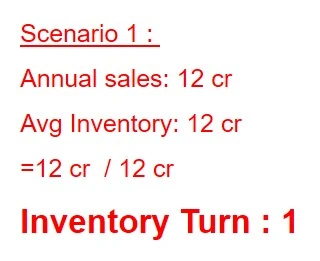
By having 12 cr worth of inventory, you manage to make 12 cr sales turnover.
That means you need working capital at any point of time is 12 cr
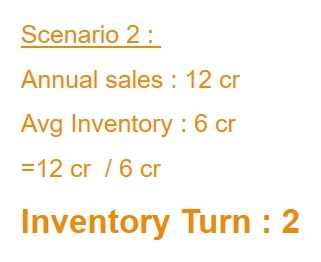
In this scenario, by having 6 cr inventory on hand, you able to make turnover of 12 cr.
That means you need only 6 cr worth of working capital which you can rotate 2 time in a year
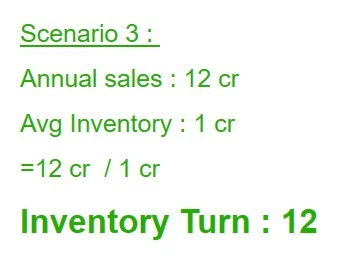
.In this scenario, by having 1 cr inventory, you able to make turnover of 12 cr.
That means you need only 1 cr working capital and you can rotate 12 times in a year.
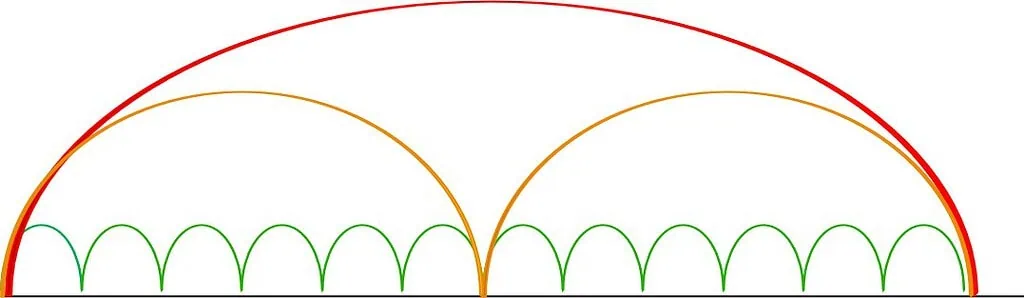
In all the scenarios, which is better for the business in terms of cashflow requirements?
Scenario 3 requires less inventory, and the cash is rotated 12 times in the year.
Higher the Inventory Turn, Better the cash flow
High inventory creates operational complexity. The more inventory you have, the more operational difficulties you will have operational difficult, such as:ike
- Storage / Floor space
- Handling
- Manpower
- Communication
- Planning
- Quality issues
What actually creates high inventory in an SME?
When inventory becomes high, it is easy to assume that the problem belongs to purchase, stores or supply chain.
In my experience, that is rarely the complete picture.
Inventory is influenced by decisions and practices across the business. That is why I prefer to look at inventory from a holistic perspective.
There are five broad areas I normally look at when trying to understand why inventory is building up.
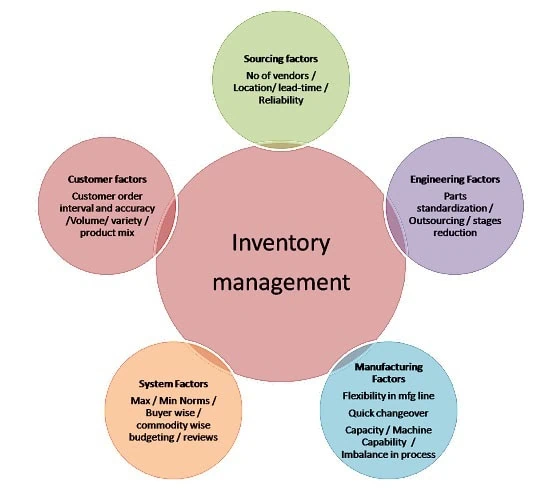
Manufacturing factors
Manufacturing practices can create a significant amount of inventory without us realising it.
Large batch sizes, long changeover times, machine breakdowns, quality problems, bottleneck operations and imbalance between processes can all increase work-in-progress.
For example, when changeover takes several hours, production teams naturally prefer larger batches. It may appear efficient from the machine’s point of view, but the additional quantity produced has to wait until the next process or until the customer actually needs it.
Similarly, poor process reliability can encourage teams to keep additional stock as protection against uncertainty.
Sometimes, therefore, what appears to be an inventory problem is actually a manufacturing stability or flow problem.
Engineering factors
Engineering decisions can also create inventory.
Frequent design changes, lack of standardisation, too many variants and components linked to older designs can leave material lying in stores for long periods.
A new component may be introduced without adequately considering the existing stock of the previous component.
Over time, these decisions can accumulate as slow-moving or non-moving inventory.
This is why inventory cannot be managed only after material reaches the stores.
Some inventory is effectively created much earlier, at the design and engineering decision stage itself.
Supply-chain factors
Supplier lead time, minimum order quantity (MOQ), supplier reliability and purchasing frequency have a direct influence on raw-material inventory.
If a supplier insists on a high MOQ, the business may have to carry more material than its immediate consumption requires.
If supplier delivery is unreliable, the purchase team may protect production by keeping additional safety stock.
The intention is understandable.
But when these practices continue without periodically reviewing actual consumption, lead time, MOQ and supplier performance, additional stock can gradually become part of the normal inventory.
Customer factors
Not all inventory is created internally.
Changes in customer schedules, inaccurate forecasts, cancelled orders, changes in product mix and customer-specific requirements can leave the company holding materials or finished goods that are no longer immediately required.
This becomes particularly important when materials or products are specific to one customer.
Therefore, we need to understand not only how much inventory we have, but also why we have it and which customer requirement originally created it.
Internal systems and planning factors
This is one area where I often find significant opportunities.
Weak forecasting, poor production planning, inaccurate inventory records, lack of clear inventory norms and disconnected decisions between sales, purchase and production can create inventory across the organisation.
Sometimes purchase is buying based on one set of assumptions, production is working to another priority and sales is committing to a different customer requirement.
Each function may be doing what it believes is right.
But the business as a whole can end up with more inventory and poorer delivery.
This is why inventory management requires coordination between sales, planning, purchase, production, engineering, quality and stores.
Inventory is ultimately the physical result of many decisions taken across the business.
When those decisions are aligned, inventory can come down while delivery improves.
When they are not aligned, a company can carry months of inventory and still struggle to supply what the customer actually needs.
How do we reduce inventory without affecting delivery?
Once we understand the causes of high inventory, the next question is:
“How do we bring inventory down without creating shortages or affecting customer delivery?”
I would not start by assigning an inventory reduction target to every function.
Instead, we need to understand the inventory, define the right stocking logic, and then address the causes of excess stock.
Start by understanding where the inventory is
Looking only at the total inventory value does not tell us enough.
We need to break it down and understand where the money is actually blocked:
- Raw material
- Work-in-progress
- Finished goods
- Slow-moving inventory
- Non-moving and obsolete inventory
For example, two companies may both carry ₹5 Cr of inventory, but the reasons can be completely different.
In one company, most of it may be raw material due to high MOQs or long supplier lead times.
In another, the problem may be excessive WIP caused by large batches, bottlenecks or long manufacturing lead times.
At another company, a significant amount may be tied up in slow-moving finished goods.
Each situation requires a different action.
That is why the total inventory number should be the starting point of the discussion, not the conclusion.
Once we know where the inventory is sitting and why it is there, we can start defining what inventory the business genuinely needs.
Define inventory norms instead of buying based on judgement
One common practice I have observed is purchasing based largely on experience or immediate requirements.
“We normally consume this much.”
“The supplier may take time.”
“We may get an order.”
“Let us keep some additional stock to be safe.”
Each decision may appear reasonable individually. But collectively, such decisions can build substantial inventory.
This is where defining inventory norms becomes important.
In simple terms, inventory norms mean defining the minimum, maximum and reorder levels for different categories of items, based on actual consumption and supply conditions.
Let us take a practical example from my book Proven Path to Profitable Growth.
Assume we have a raw material with the following data:
| Parameter | Value |
|---|---|
| Average daily consumption | 50 units |
| Supplier lead time | 15 days |
| Safety stock | 200 units |
| Minimum order quantity (MOQ) | 1,500 units |
The minimum level can be calculated as:
Minimum level = (Average daily consumption × Lead time) + Safety stock
= (50 × 15) + 200 = 950 units
This can also become the reorder level.
If the supplier’s MOQ is 1,500 units, the reorder quantity is 1,500 units.
Therefore:
Maximum level = Minimum level + Reorder quantity
= 950 + 1,500 = 2,450 units
So, instead of deciding how much to purchase based mainly on judgement, the team now has a defined operating range:
Minimum / Reorder level: 950 units
Maximum level: 2,450 units
This is the practical logic I prefer behind inventory norms. The example in the book uses these same inputs and calculations.
Of course, inventory norms should not remain fixed forever.
Consumption can change. Supplier lead times can improve or deteriorate. MOQ can change. Business volumes can change.
Therefore, inventory norms need to be periodically reviewed and revised in light of actual business conditions.
The purpose is not simply to reduce stock.
It is to create a clear stocking boundary that protects material availability without unnecessarily blocking working capital.
Not every inventory item should be managed in the same way
Defining inventory norms is important. But in a manufacturing business with hundreds or thousands of line items, we cannot manage every item with the same level of attention or the same stocking logic.
Some items have a high value but move infrequently.
Some are low-value items but are consumed regularly.
Some items may not have moved for several months.
This is where ABC-FSN classification becomes useful.
ABC classification helps us analyse inventory by value, while FSN classification helps us determine whether an item is Fast-moving, Slow-moving, or Non-moving.
Looking at both together helps us decide which items require greater management attention and what stocking approach is appropriate.
For example, an A-class, slow-moving item requires close attention because even a relatively small quantity can block significant working capital.
A fast-moving item that is regularly required for production needs a different approach. Here, material availability becomes important because a shortage can immediately affect production and customer delivery.
For non-moving items, we need to ask:
Why is this material not moving? Why was it purchased or produced? Is there a genuine future requirement?
The purpose of ABC-FSN classification is therefore not merely to prepare another inventory report.
It helps us differentiate inventory and apply the right stocking and review logic across different item categories.
Review slow-moving and non-moving inventory separately
Slow-moving and non-moving inventory should not be included in the overall inventory number.
I prefer to make them visible and review them separately.
For significant items, we need to understand why the inventory accumulated and decide what action to take.
But there is an equally important question:
“What should we change so that the same inventory does not accumulate again?”
Clearing existing non-moving inventory may release working capital once.
Preventing its recurrence strengthens the inventory management system.
Why should inventory planning be connected with sales and production?
Inventory norms and classification alone will not solve the problem if sales, purchasing, and production operate with different priorities.
Purchasing needs visibility on what is likely to be required.
Production needs clarity on what to produce and when.
Sales needs to provide the best possible visibility of customer demand and changes in customer schedules.
When these are disconnected, purchasing may procure material that is not immediately required, while production may simultaneously face shortages of materials needed for current customer orders.
This is another reason why a company can have high overall inventory and still struggle with delivery.
Historical sales and consumption data can help us understand demand patterns, customer trends and seasonal variations. This information needs to flow into production and material planning.
The linkage should be clear:
Customer demand → Sales plan → Production plan → Material requirement → Purchase plan
When this linkage becomes stronger, the business can make better decisions about what to buy, how much to buy and when to buy.
Vendor performance also influences how much inventory we need
Inventory planning cannot ignore supplier performance.
If a critical supplier consistently meets the agreed lead time and quality requirements, we can plan inventory with greater confidence.
But when supplier deliveries are unreliable or lead times keep changing, the organisation naturally starts carrying additional stock as protection.
This is why vendor performance is directly connected to inventory.
We need to review areas such as:
- On-time delivery
- Lead-time consistency
- Quality performance
- Responsiveness
MOQ also needs attention.
If a supplier’s MOQ forces us to purchase substantially more than we actually consume, we should explore whether the MOQ can be optimised or deliveries staggered.
The objective is not simply to push inventory back to the supplier.
The objective is to improve material flow and reduce the uncertainty that forces the business to carry unnecessary inventory.
When sales visibility, production planning, purchasing, and vendor performance work together, inventory becomes much more closely aligned with what the business actually needs.
Can inventory come down even when the business is growing?
One concern a founder may naturally have is:
“If my business is growing, won’t I need more inventory to support that growth?”
Some increase in inventory may be required as the business grows. But inventory need not necessarily increase in the same proportion as sales.
I have seen this in practice.
In one of the businesses I worked with, we took a holistic approach to improving operations rather than treating inventory as an isolated problem.
We worked on different areas of operational performance, and the results were significant:
- Turnover increased 3X in 12 months
- Delivery performance improved to 92%
- Operations reduced from three shifts to one shift
- Rejection reduced from around 10% to 2%
- Changeover time reduced from around 6 hours to 30 minutes
- OEE improved to around 65%
- Inventory reduced by 54%
What is important here is not the inventory reduction alone.
The business achieved 3X turnover while carrying significantly lower inventory.
This happened because inventory was not addressed in isolation.
When changeover time was reduced, the business could operate with smaller batches.
When quality improved, less material was blocked in rejection and rework.
When productivity and OEE improved, material could flow through the factory more effectively.
When planning and delivery discipline improved, the need to carry additional inventory as protection against uncertainty also reduced.
This experience reinforced an important point for me:
Inventory is an outcome of the business’s overall operating system.
A growing business does not necessarily need inventory to grow at the same rate as sales.
It needs the right inventory, supported by stronger planning, reliable processes and better execution.
What should a founder review about inventory?
As a founder or business head, you do not need to get involved in every purchase order or inventory transaction.
But you need to know whether your inventory management system is working.
I would suggest looking at a few important questions during the monthly business review.
How much inventory are we carrying?
Look at the overall inventory and how it is moving over time.
More importantly, understand how much is sitting in raw materials, work in progress, and finished goods.
Do not look at the inventory value alone. Relate it to the current level of business.
If sales are growing by 20% while inventory is growing by 40%, we need to understand what is driving the difference.
How much of our inventory is actually moving?
Make slow-moving and non-moving inventory visible separately.
If these numbers keep increasing, understand what is creating them and what actions are being taken.
Are our inventory norms still relevant?
Check whether minimum, maximum and reorder levels have been defined for important categories of materials.
More importantly, check whether these norms are reviewed when consumption, supplier lead times, MOQs, or business volumes change.
Are supplier conditions making us carry unnecessary inventory?
Look at whether long or inconsistent lead times, high MOQ or unreliable supplier performance are forcing the business to maintain additional stock.
These are not merely purchase issues. They affect working capital and delivery.
Are inventory and delivery improving together?
For me, this is one of the most important questions.
Do not review inventory reduction in isolation.
If inventory comes down but OTD deteriorates, we have probably reduced the wrong inventory or weakened material availability.
At the same time, if inventory continues to increase but OTD is not improving, the additional inventory is clearly not solving the delivery problem.
The real indication of a stronger inventory system is achieving better inventory levels and reliable customer delivery.
That brings us back to the question with which we started this article:
If we have so much inventory, why are we still missing deliveries?
A founder does not need to manage inventory every day.
But the founder should know whether the inventory being carried is genuinely supporting sales and delivery or simply blocking working capital.
Why is inventory management a business execution capability?
Inventory may physically sit in stores, warehouses, or on the shop floor, but as we have seen throughout this article, the causes of inventory are spread across the business.
Sales forecasts influence what we plan.
Engineering decisions influence the number of materials and variants we need.
Supplier lead times and MOQs influence how much we buy.
Production planning, batch sizes, changeover time, quality, and process reliability influence the amount of material remaining as work in progress.
Customer schedule changes influence what eventually moves and what gets left behind.
That is why I do not see inventory management as the responsibility of the stores or purchase function alone.
It is an outcome of how well the business’s different functions work together.
This is also why inventory management forms an important part of Business Execution Capability in my Profitable Growth Capability Framework (PGCF).
When planning becomes stronger, suppliers become more reliable, manufacturing flow improves, and different functions start working with common priorities, inventory can come down while delivery performance improves.
The experiences discussed in this article show that inventory can decline even as delivery and business performance improve.
For a founder, therefore, high inventory should not trigger only one question:
“How can we reduce inventory?”
A more useful question is:
“What is happening in the business that requires us to carry so much inventory and still prevents us from delivering reliably?”
Finding and addressing those underlying causes ultimately creates healthier inventory, better cash flow, and stronger business execution.