
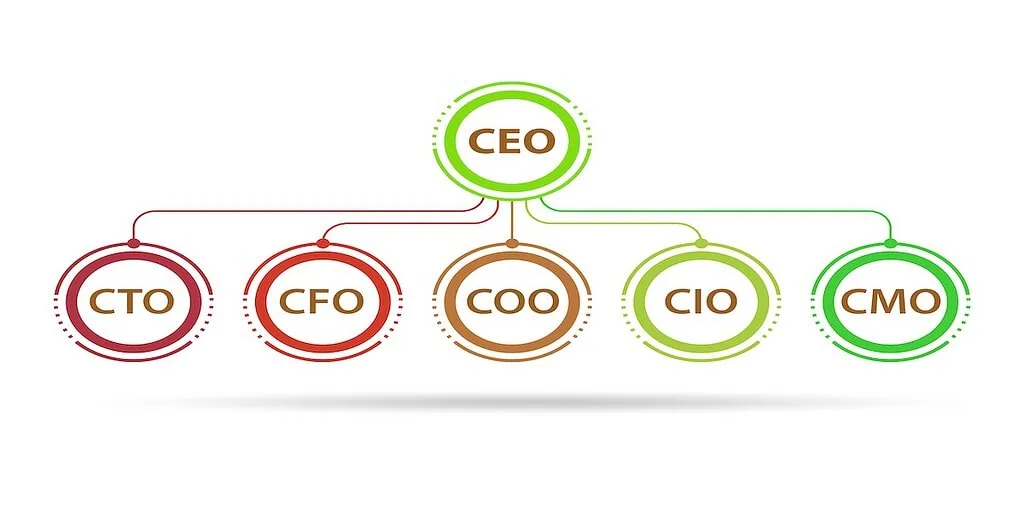
Developing second level leaders in an SME becomes increasingly important as the business grows.
But how do we know whether the second level leadership team is really effective?
For me, it is not when all the functional head positions are filled.
It is when these leaders understand the company’s objectives, know how their function contributes to them, take ownership of their results and make decisions within their responsibility.
They should be able to review their functions, identify gaps, initiate corrective actions and keep the founder appropriately informed, without continuously depending on the founder.
There is a simple test.
What happens when the founder is away from the business for a week?
Do decisions wait? Do problems accumulate? Or can the leadership team review, decide, coordinate and keep the business moving?
The answer tells us a lot about the strength of the second level.
In my experience of working with SMEs, developing this leadership layer is one of the important transitions in a growing founder-led business.
But it cannot happen only by recruiting experienced managers or sending people for leadership training.
Second level leaders have to learn to take ownership. At the same time, the founder has to learn to let go.
Start with the organisation you need for growth
Before asking, “How do I develop my managers?”, I would ask another question:
“What second level leadership capability will my organisation need for the next stage of growth?”
Suppose an SME is ₹50 crore today and aspires to become ₹100 crore.
What kind of sales leadership will it require?
What operations capability will be needed?
How strong should supply chain, finance, quality, HR and product development become?
The leadership structure that brought the organisation to ₹50 crore may not necessarily take it to ₹100 crore.
The founder or CEO should therefore periodically look at each critical function and ask:
- What capability will we need as the business grows?
- What capability do we have today?
- Can the existing person be developed?
- What exposure and support will the person need?
- Or should we bring the required capability from outside?
This is not about filling all the boxes in an organisation chart.
It is about consciously building the leadership team required for the next stage of the business.
This is an important part of building stronger Leadership & Organisation Capability. As the business grows, leadership bandwidth, role clarity, decision-making and people capability must grow along with it.
I have also discussed this broader question in SME Growth Readiness: Is Your Organisation Really Ready for the Next Stage of Growth?
Give responsibility with authority
Once we identify people with the potential to lead functions, development cannot happen through training alone.
They need real responsibility.
A production head should progressively own production performance, not merely prepare the production plan.
A sales head should own the sales plan, pipeline and agreed business outcomes, rather than waiting for the founder’s direction on every important customer.
A supply chain head should be able to handle routine material and inventory decisions within agreed boundaries.
This is where many organisations struggle.
We tell managers:
“You have to take ownership.”
But when an important decision comes, they still have to ask the founder.
After some time, asking becomes a habit.
If we want people to take ownership, responsibility must come with appropriate authority.
Founders also have to learn to let go
This is perhaps the more difficult part.
Many founders genuinely want to develop their second level. But when something important comes up, the natural thought can be:
“What if they make the wrong decision?”
Or:
“I know this better. I can handle it faster.”
The founder may actually be right.
After years of building the business, the founder may understand the customer, product and organisation much better than the manager.
But if we want someone else to take ownership, we have to be willing to let go of some control.
We cannot ask a person to take ownership while continuing to hold every important decision ourselves.
I have seen this become a cycle:
Founder doubts capability → Retains decisions → Manager gets little opportunity to decide → Capability does not develop → Founder sees this as proof that the manager is not ready.
Breaking this cycle requires development on both sides.
The second level leader needs to improve capability.
The founder needs to improve delegation and empowerment.
I have explored this challenge in greater depth in Founder Dependency: Why It Limits Business Growth.
Let go without losing control
Letting go does not mean leaving people alone.
For me, effective delegation has a few basic elements:
Clear objective → Clear responsibility → Decision boundaries → Freedom to execute → Review and feedback
The founder still remains accountable for the business.
But the way the founder achieves results starts changing.
Instead of personally doing, deciding and following up on everything, the founder builds leaders who can do these things.
This is also an important part of Founder & Business Head Capability. As the business grows, the leader needs to move beyond personal involvement and progressively build people and organisational capability.
Good review mechanisms make this transition easier.
The functional leader should increasingly come to the review with performance, gaps, corrective actions and decisions requiring support.
The founder’s role gradually shifts from doing and deciding to guiding and reviewing.
Do not bypass your second level leaders
I have seen the consequences of this in one of the organisations I worked with.
The company was recruiting people into second level positions, but some of them were leaving within a relatively short period.
One pattern caught my attention.
When a person started learning a function and becoming capable of delivering, responsibilities were sometimes changed. The person was moved into another area before getting enough time to establish himself in the existing role.
The intention may have been good. The founder wanted capable people to take on different responsibilities.
But the person was neither getting enough time to demonstrate sustained performance in the existing role nor enough time to learn and establish himself in the new one.
There was another issue.
When execution was not happening as expected, the founder would sometimes directly approach the third level and get things done.
Again, the intention was understandable.
The work had to happen.
And because of the founder’s experience and drive, he could make it happen.
But think about what the second level leader experiences:
“I am responsible for the function, but my own team is receiving direction directly from the founder.”
Gradually, the second level leader can lose authority and credibility in front of the team.
The third level also learns that when something important happens, the founder is the real decision-maker.
Then it becomes difficult to expect the second level person to demonstrate strong ownership.
Bypassing the second level may solve today’s problem, but repeated bypassing can weaken tomorrow’s leadership.
If a functional leader is struggling, understand why.
Is there a capability gap?
Is the expected outcome unclear?
Does the person have adequate authority?
Does the person need coaching and feedback?
Or is the person genuinely unsuitable for the role?
Sometimes changing the person may be necessary. But continuously bypassing the role is not a sustainable solution.
This becomes even more important when an SME recruits an experienced functional or senior leader from outside. I have discussed the challenges from both the founder’s and the new leader’s perspectives in Why Most Senior Recruits Fail and What Founder and Leader Can Do.
Give leaders time to become leaders
Leadership capability does not develop immediately after giving someone a designation.
People need time to understand the function, establish priorities, build relationships, make decisions, experience results and learn.
There will also be mistakes.
Sometimes a second level leader may take a decision differently from how the founder would have taken it.
Different does not automatically mean wrong.
If every different decision is corrected immediately, people slowly learn:
“It is safer to ask the founder.”
That may prevent a few short-term mistakes, but it will not build decision-making capability.
A useful question for the founder is:
“Is this a mistake I must prevent, or an experience through which my leader needs to learn?”
Of course, large investments, significant financial exposure, strategic decisions and major customer commitments may still require founder involvement.
That is why decision boundaries are important.
The objective is not to remove the founder from decisions. It is to ensure that decisions happen at the right level.
I have discussed this aspect further in Decisiveness in Leadership: How to Make Better Decisions.
Use the power of feedback
Letting go does not mean waiting until the final result and then judging the person.
Feedback is what converts experience into development.
Suppose a functional head takes a decision and the outcome is not as expected.
Instead of immediately telling the person what should have been done, the founder can ask:
- What were you trying to achieve?
- What was your thinking when you took the decision?
- What happened differently from what you expected?
- What would you do differently next time?
The founder can then add his own experience and perspective.
This develops judgement.
The purpose of feedback is not to demonstrate that the founder knew better. It is to make the leader better prepared for the next decision.
Feedback is equally important when things go well.
When a manager handles a difficult customer, improves a KPI, resolves an operational issue or manages a cross-functional problem independently, recognise what the person did well.
Over time, leadership development becomes a continuous cycle:
Delegate → Empower → Observe → Review → Give feedback → Coach → Expand responsibility
As capability grows, the founder can progressively let go of more responsibility.
Use reviews to build ownership
Review meetings can play an important role in developing second level leaders, provided the founder does not use the review to take every decision back.
A capable functional leader should gradually learn to review:
- What was expected?
- What has actually happened?
- Where is the gap?
- What is causing the gap?
- What action is being taken?
- What decision or support is genuinely required from the founder?
This changes the quality of the conversation.
The functional head is no longer merely presenting numbers to the founder. The person is reviewing the business, thinking through the problem and taking responsibility for improvement.
The founder can then focus on asking the right questions, challenging the thinking where required and providing guidance.
A good review mechanism should therefore reduce dependency rather than increase it.
I have explored this further in Why Business Review Meetings Fail to Improve Execution.
Develop business leaders, not only functional experts
A strong second level leader should eventually understand more than his or her own function.
A production head should understand how production decisions affect delivery, inventory, cost and customers.
A sales head should understand capacity, margins, working capital and delivery capability.
A finance head should understand what is happening operationally, not only report the numbers.
This broader understanding changes the way people think.
Instead of asking:
“What should my department do?”
they begin asking:
“What does the business need from my function?”
They begin to see themselves as pillars of the organisation, contributing to the larger company objectives.
That is an important transition from being a functional manager to becoming a business leader.
The founder and the second level have to grow together
When second level leadership is weak, it is easy to say:
“My people are not taking ownership.”
Sometimes that may be true.
But as founders, we should also reflect:
- Have I clearly defined what I expect from them?
- Have I given responsibility along with authority?
- Am I allowing them to make decisions?
- Am I giving them enough time to establish themselves?
- When they struggle, do I coach them or take the responsibility back?
- Am I giving them meaningful feedback?
And perhaps the most difficult question:
Am I really willing to let go?
Building a strong second level team is therefore not only about developing managers.
The founder also has to develop the capability to achieve results through other leaders.
In the early stages, the founder grows the business by personally making things happen.
As the organisation grows, the founder increasingly has to grow the business by developing people who can make things happen.
That is when a group of functional managers starts becoming a leadership team.
And that is when the organisation begins becoming stronger than the founder alone.
Related articles
- Founder Dependency: Why It Limits Business Growth – How founders can reduce unnecessary decision dependency and build greater organisational capability.
- Why Most Senior Recruits Fail and What Founder and Leader Can Do – What founders and newly recruited senior leaders can do to build trust, clarity and effectiveness.
- Decisiveness in Leadership: How to Make Better Decisions – Why decision-making capability needs to move progressively to the right levels as an organisation grows.
- Why Business Review Meetings Fail to Improve Execution – How effective reviews can strengthen accountability, thinking and ownership across the leadership team.
- SME Growth Readiness: Is Your Organisation Really Ready for the Next Stage of Growth? – Why people, leadership, systems and organisational bandwidth need to grow along with sales.